
Nassau History Overview
Nassau, the capital of the Commonwealth of the Bahamas, has a history as vibrant and layered as the turquoise waters that surround it. From its pre-Columbian beginnings and Spanish encounters to its Golden Age of piracy, colonial development, and emergence as a sovereign nation's political and cultural center, Nassau's story reflects strategic geography, maritime commerce, and a resilient local identity.
Early inhabitants and European contact
Long before European contact, the islands that would become the Bahamas were inhabited by Lucayan Taínos, an Arawakan people who migrated from other Caribbean islands around the 9th to 12th centuries CE. They established villages, fished, cultivated root crops, and navigated the shallow seas in canoes. The Lucayan population on the islands that include New Providence (where Nassau sits) was relatively small but regionally connected.
Christopher Columbus made landfall in the Bahamas in 1492, at San Salvador (historically believed to be Watling's Island, though exact location is debated). Spanish contact led to the forced relocation or enslavement of many Lucayans; within decades the native population had been decimated. After the Spanish established no permanent settlements in the central Bahamas, the islands remained sparsely occupied for more than a century.
English claim and early settlement In the mid-17th century, English colonists and privateers began to arrive. Following the English Civil War and the Restoration of the monarchy, the British Crown granted proprietary rights to groups who attracted settlers to the Bahamas. In 1670 the islands were formally made a British colony. Early European settlement was modest and often transient, focused on piracy, wrecking (salvaging shipwrecks), and small-scale agriculture. Nassau itself began as Charles Town on the island of New Providence in the 1670s.
The town suffered frequently from Spanish raids and internal instability. In 1695, Spanish attacks destroyed Charles Town, and again in 1703 it was wrecked. In 1713, the Treaty of Utrecht consolidated British claims, and more settlers arrived, but the settlement remained vulnerable and underdeveloped.
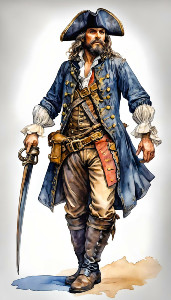
The Golden Age of Piracy Nassau's most dramatic early chapter came during the early 18th century, when it became a de facto pirate republic. The end of the War of the Spanish Succession in 1714 left many privateers unemployed. New Providence's sheltered harbor, shallow approaches, and proximity to shipping lanes made it an ideal base for pirates who preyed on Spanish and other European shipping in the Caribbean and Atlantic.
By the 1710s, Nassau had become a haven for prominent pirates like Benjamin Hornigold, Charles Vane, and — most famously — Edward Teach, known as Blackbeard. Pirates set up near-legal institutions: they held courts to divide spoils and organized a form of self-governance. The phrase "the Republic of Pirates" captures this era's lawless autonomy. The town's reputation grew, attracting merchants who traded with pirates and making Nassau a focal point of smuggling and illicit commerce.
The British government moved to suppress piracy in the 1710s and 1720s. In 1718, Woodes Rogers, a former privateer appointed Royal Governor, arrived with naval force and pardons for pirates who surrendered. His arrival effectively ended Nassau's pirate ascendancy. Rogers re-established British authority, built fortifications, and encouraged legitimate trade and settlement. His tenure is often credited with converting Nassau from a rogue outpost into a functioning British colony.
Colonial growth and Loyalist influence
Throughout the 18th century, New Providence and Nassau grew slowly. The economy centered on ship provisioning, small-scale agriculture, and commerce. The American Revolutionary War (1775–1783) and the later Haitian Revolution (1791 onward) reshaped Caribbean demography. After the American Revolution, tens of thousands of Loyalists (American colonists loyal to Britain) fled north to British territories, and many were resettled in the Bahamas. In the 1780s, thousands of Loyalists and enslaved people arrived, dramatically increasing the population. They established plantations on nearby islands, though poor soil and hurricanes limited agrarian success in many areas, leaving the economy oriented toward trade, maritime services, and later, tourism.
The 19th century saw continued maritime importance. The Royal Navy used the Bahamas strategically, particularly during the Napoleonic Wars and to suppress the transatlantic slave trade after Britain abolished the trade in 1807. The abolition of slavery within the British Empire in 1834 brought social and economic transformations; formerly enslaved Bahamians played a growing role in the colony's economic life, from boat-building and fishing to retail trade.
20th century: tourism, wartime significance, and political evolution In the 20th century Nassau evolved into the social, political, and economic heart of the Bahamas. Tourism began to develop in the early decades, attracting American and European visitors drawn to the climate, beaches, and proximity to the U.S. Prohibition era in the United States (1920–1933) turned Nassau into a lively hub for rum-running and nightlife.
World War II increased the islands' strategic importance. The U.S. and Britain used the Bahamas for naval bases and airfields; the 1940s brought infrastructural and population growth. Postwar prosperity amplified tourism, with air travel enabling mass visitation by the 1950s and 1960s. Casinos, hotels, and cruise-shipping facilities rose in and around Nassau, transforming the local economy.
Politically, the 20th century culminated in the Bahamas' gradual move toward self-government and independence. The movement for greater political autonomy grew after World War II. The Progressive Liberal Party (PLP), founded in 1953, championed majority rule, expanded education, and economic opportunities for native Bahamians. Under PLP leader Lynden Pindling, the Bahamas achieved internal self-government in 1964, and universal suffrage and majority-rule policies advanced. On July 10, 1973, the Bahamas became an independent Commonwealth realm within the British Commonwealth, and Nassau became the national capital of the newly sovereign state.
Post-independence Nassau: growth, challenges, and culture
Since independence, Nassau has expanded as the political, financial, and tourist center of the Bahamas. The city's economy relies heavily on tourism (hotels, resorts, and cruise tourism), international finance, and services. The downtown area — Bay Street, the Straw Market, and historic forts such as Fort Charlotte and Fort Fincastle — draw visitors interested in the city's past. The development of Paradise Island and large resort complexes in the latter half of the 20th century further shaped Nassau's urban and social landscape.
Nassau has also confronted urban challenges common to rapidly developing capitals: housing shortages, economic inequality, and environmental vulnerability. Being low-lying and exposed to hurricanes, the city faces recurrent storm damage and long-term threats from sea-level rise. Efforts to diversify the economy, improve infrastructure, and preserve cultural heritage have been ongoing priorities.
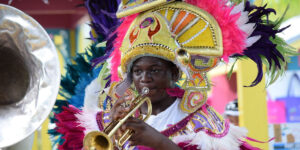
Cultural identity and legacy Nassau's cultural life is a blend of African, British, and Caribbean influences. Junkanoo, the vibrant street parade with music, colorful costumes, and rhythmic dancing held on Boxing Day and New Year's Day, is perhaps the best-known cultural expression and underscores a communal identity rooted in resistance, celebration, and continuity. Music, crafts, cuisine (conch fritters, fish dishes), and religious life reflect this syncretic heritage.
Historic sites — including colonial buildings, forts, and the remnants of pirate lore — coexist with modern high-rises, shopping centers, and international banks. The city's museums and cultural institutions, such as the National Art Gallery and the Pompey Museum of Slavery & Emancipation, contribute to an understanding of the Bahamas' past and present.
Conclusion
Nassau's history is marked by a series of reinventions: from Lucayan settlement to colonial outpost, pirate haven to imperial garrison, and finally to the capital of an independent nation. Its strategic geographic position shaped much of its trajectory, attracting settlers, privateers, merchants, and tourists across centuries. Today Nassau is at once a gateway for global visitors and a living repository of Caribbean history — a place where the legacies of indigenous peoples, colonialism, piracy, slavery, and resilience converge to form a distinct Bahamian identity.